The Cool Girl

Effortless, edgy style that always looks right

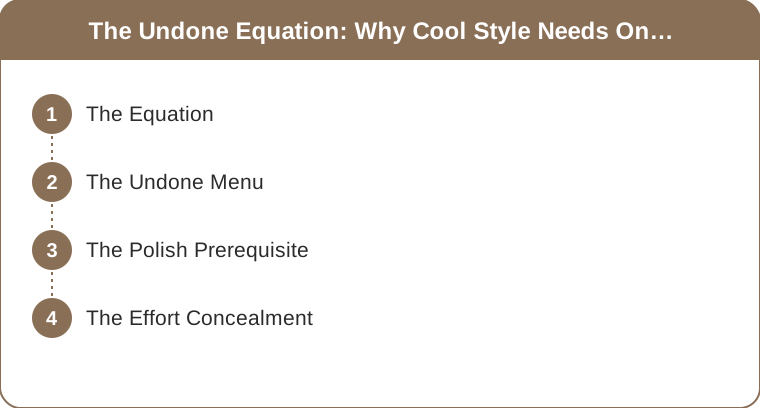
The Undone Equation: Why Cool Style Needs One Loose End

2026-07-15

Quick Answer: Cool style follows a simple formula: a polished base plus exactly one undone element. A half-tuck, a pushed-up sleeve, deliberately relaxed hair, or sneakers under tailoring. Polished everything reads as trying too hard; undone everything reads as laundry day. One loose end against otherwise finished surroundings is the whole trick.

There’s a moment you’ve probably had: you’re fully dressed, everything is smooth and tucked and correct, and something is off. It looks fine. It also looks like you thought about it for forty minutes.

The fix takes about four seconds, and it’s the same fix every time — untuck something.

The Undone Equation: Why Cool Style Needs One Loose End

At a glance

What Is the Undone Equation?

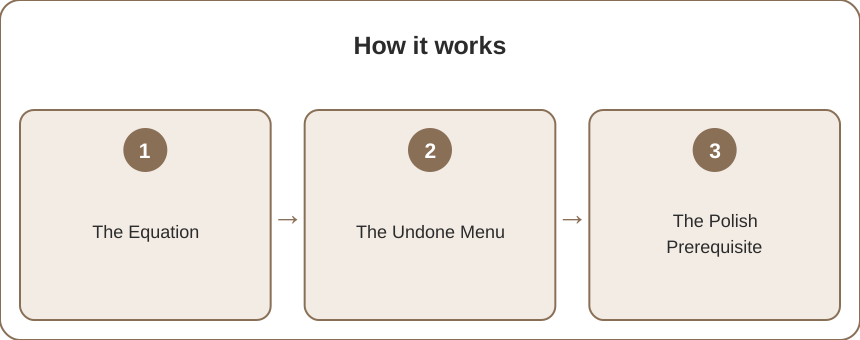
Written out, it’s almost embarrassingly simple:

Polished base + ONE undone element = cool Polished everything = trying Undone everything = Tuesday laundry

The single loose end makes a claim: this took no effort. The polished base underneath quietly contradicts that claim. That tension — between the story the outfit tells and the evidence it leaves — is the actual style. Neither half works alone.

It’s the same reason a beautifully made bed with one deliberately rumpled throw looks designed while a genuinely unmade bed just looks unmade. Context does all the work.

Which Undone Elements Actually Work?

There’s a fairly short approved menu. Pick one per outfit.

The half-tuck. The genre’s flagship. Front section tucked, everything else out. Creates a waist, adds asymmetry, reads as accidental.

The pushed or unbuttoned sleeve. Shove them to the elbow. Leave the cuff undone. Instantly less formal without changing the garment.

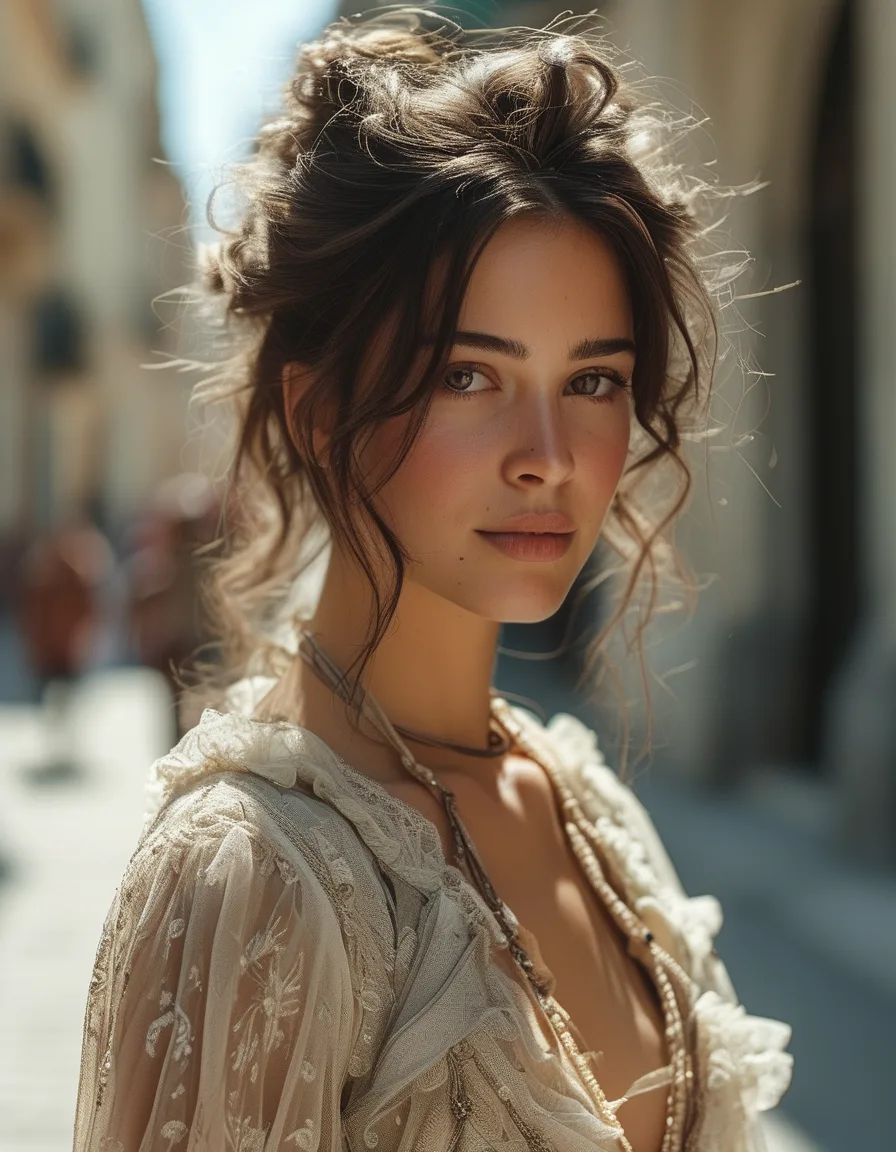
Deliberately relaxed hair against a sharp outfit. Air-dried texture, a loose low bun, second-day waves — paired with tailoring. This is the highest-leverage move on the list and the one most people skip.

The sneaker under tailoring. A clean white trainer with a suit. Old news, still works.

The bare face with a strong lip. Skip the full base, do the mouth. Reads as “I had five minutes,” which is the exact register you want.

One per outfit. Two loose ends and the story starts unraveling — at that point you’re not making a claim about effortlessness, you’re just underdressed.

The Undone Equation: Why Cool Style Needs One Loose End

Why Does Undone Only Work Over Polish?

This is the half of the equation people forget, and it’s why the trick fails for so many.

The undone element reads as cool only against done surroundings. Clean shoes. Tailoring that actually fits. Fabric that hasn’t pilled. Hair that’s been washed recently even if it hasn’t been styled.

A half-tuck into crisp, well-cut trousers is a style decision. A half-tuck into wrinkled trousers isn’t undone — it’s just morning. Same gesture, opposite meaning, and the only variable is what surrounds it.

So the order matters: polish first, then loosen exactly one bolt. Get everything to a finished state, then remove one thing on purpose. Trying to shortcut straight to “casually undone” without the polish underneath produces the look you were trying to avoid.
What Nobody Tells You About Effortless Style

The genre’s honest secret is that effortless is a produced effect, and the production stays firmly backstage.

The relaxed hair took product and a diffuser. The half-tuck took three attempts and a mirror check. The jacket falls open like that because it was tailored, or because it’s the fourth one she tried. The “I just threw this on” narrative is marketing, and everyone involved knows it.

What’s actually being concealed isn’t effort — it’s evidence of effort. Visible effort is the only thing the look forbids. You can spend an hour, as long as nothing in the finished outfit points at the hour.

The practical version is a small ritual: finish completely, then subtract one thing on the way out the door. Fully dressed, fully tucked, hair done — then untuck the front, or shove the sleeves up, or pull two pieces of hair loose. Subtraction at the end, not sloppiness from the start.

The other thing nobody mentions: this gets easier with better clothes, not more clothes. A well-cut shirt half-tucks beautifully because it has structure to hold the shape. A cheap thin one just bunches. The undone look quietly depends on fabric doing some of the work for you.

How it works

How Do You Know If You’ve Gone Too Far?

Three quick tests before you leave.

Count your loose ends. More than one and you’re over. Untucked shirt and messy hair and scuffed shoes is not an equation, it’s a surrender.

Check the base is genuinely finished. If you removed the undone element, would the outfit look complete and considered? If the answer is no, you don’t have a polished base — you have an unfinished outfit with a rationalization attached.

Look at it from six feet away. Undone reads correctly at conversational distance. Up close in a mirror it always looks slightly wrong, which is why people over-correct and tuck everything back in.

Frequently Asked Questions

Can the undone element be your hair rather than your clothes?

Yes — and for a lot of people it’s the easiest version. A fully polished outfit with genuinely relaxed hair is one of the most reliable cool-girl formulas going, partly because hair texture reads as effortless in a way that clothing choices rarely do. If you’re only going to use one loose end, this is a strong candidate.

Does the undone rule work with formal outfits?

It does, but the loose end has to be smaller. At a wedding or a serious work event, “undone” might mean an unbuttoned top button, a slightly loose updo, or skipping jewelry entirely — not an untucked shirt. The rule scales down; it doesn’t disappear.

Is the half-tuck still current?

Yes. It’s moved from trend to permanent technique, the same way rolled sleeves and pushed-up jacket cuffs did. What changes is the styling around it — the tuck itself has been quietly working for a decade and shows no sign of stopping.


TL;DR:

  • The formula: polished base + exactly one undone element
  • Polished everything reads as trying; undone everything reads as laundry day
  • Approved loose ends: half-tuck, pushed sleeves, relaxed hair, sneakers under tailoring, bare face with strong lip
  • The undone piece only works against genuinely finished surroundings — clean shoes, real tailoring, good fabric
  • Effortless is a produced effect; what stays hidden is the evidence of effort, not the effort
  • The ritual: get fully finished, then subtract one thing on your way out

Polish everything, loosen one bolt, hide the rehearsal. The effortless look was always an equation — solved backwards from “done,” minus exactly one.

Keep Reading

This article is for general styling and informational purposes only. Trends, sizing, availability and pricing may vary by brand and season.

undone styleeffortless cooldeliberate imperfection

← All articles